

AI
What Google’s ‘quantum supremacy’ means for the future of computing
For the first time ever, a quantum computer has performed a computational task that would be essentially impossible for a conventional computer to complete, according to a team from Google. Scientists and engineers from the company’s lab in Santa Barbara announced the milestone in a report published Wednesday in the…
Read More »The 2020 Customer Experience
In the digital era, customers expect contextual, intuitive and experiential engagement with businesses across touchpoints. As expectations rise, contact centers have evolved from voice telephony to proactive, agent-less, self-enabling hubs that deliver personalized, omni-channel customer experiences. By 2020, Digital 2.0 technologies such as machine learning (ML), artificial intelligence (AI), biometrics…
Read More »Real life tips and learnings of applying artificial intelligence in marketing
This post is by Anton Buchner, a senior consultant with TrinityP3. Anton is one of Australia’s leaders in data-driven marketing. Helping navigate through the bells, whistles and hype to identify genuine marketing value when it comes to technology, digital activity, and the resulting data footprint. Trends abound in Marketing. It’s an exciting part of the discipline’s…
Read More »‘QUANTUM APOCALYPSE’: HOW ULTRA-POWERFUL COMPUTERS COULD CRIPPLE GOVERNMENTS AND EFFECTIVELY BREAK THE INTERNET
A new era of unfathomably fast computers is just a few years away, with quantum computers set to transform the way we communicate, cure disease, and even solve problems previously thought impossible. But some computing experts fear functional quantum computers could also effectively break the internet as we know it. Recent progress made by…
Read More »How Artificial Intelligence Is Changing The Landscape Of Digital Marketing
All digital marketing operations are now affected by AI-powered tools Digital marketers are trying hard to leverage AI for strategic planning and campaign decision making A roadmap is required to stay ahead from the crowd, few tips to prepare for that Artificial Intelligence (AI) technology is now a big thing…
Read More »Ghost post! Google creates world’s most powerful computer, NASA ‘accidentally reveals’ …and then publication vanishes
FILE PHOTO © Pixabay / Pete Linforth Google’s new quantum computer reportedly spends mere minutes on the tasks the world’s top supercomputers would need several millennia to perform. The media found out about this after NASA “accidentally” shared the firm’s research. The software engineers at Google have built the world’s…
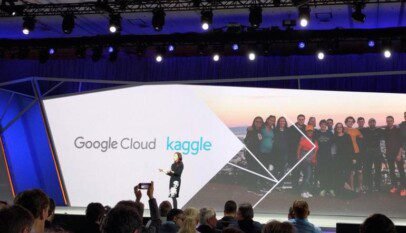
Read More »Google confirms acquisition of data science community Kaggle
Amid rumours, Google has confirmed the acquisition of Kaggle, a community platform full of data scientists and machine learning enthusiasts. On Wednesday, Google said in a blog post that Kaggle will be joining Google Cloud, in which the skills of Kaggle’s team will be put to use in machine learning training and…
Read More »Jordan Peterson: The deepfake artists must be stopped before we no longer know what’s real
Something very strange and disturbing happened to me recently. If it was just relevant to me, it wouldn’t be that important (except perhaps to me), and I wouldn’t be writing this column. But it’s something that is likely more important and more ominous than we can even imagine. There are…
Read More »The Role of Explainable AI (XAI) in Regulating AI Behavior: Delivery of “Perfect” Information
Before presenting my thoughts on XAI as a behavior-regulating feature, it is important to recap an excerpt from what I wrote last month in my “five observations” post: Regulating AI behavior is necessary in order to mitigate harm. One approach for achieving this is imposing a legal requirement that prior…
Read More »Artificial Intelligence Policies in East Asia: An Overview from the Canadian Perspective
Artificial Intelligence Policies in East Asia: An Overview from the Canadian Perspectiveprovides an overview of policies on artificial intelligence (AI) from three East Asian countries – China, Japan, and South Korea. This new report focuses on government policies, talent management, and ethical, legal, and social implications of AI, tomorrow’s leading…
Read More »











Leading with a security-first mentality
As technology rapidly develops, the number of security and privacy concerns will only continue …